"My haircut was actually too bad to make anything out of it."
Jurriën Hendrikx
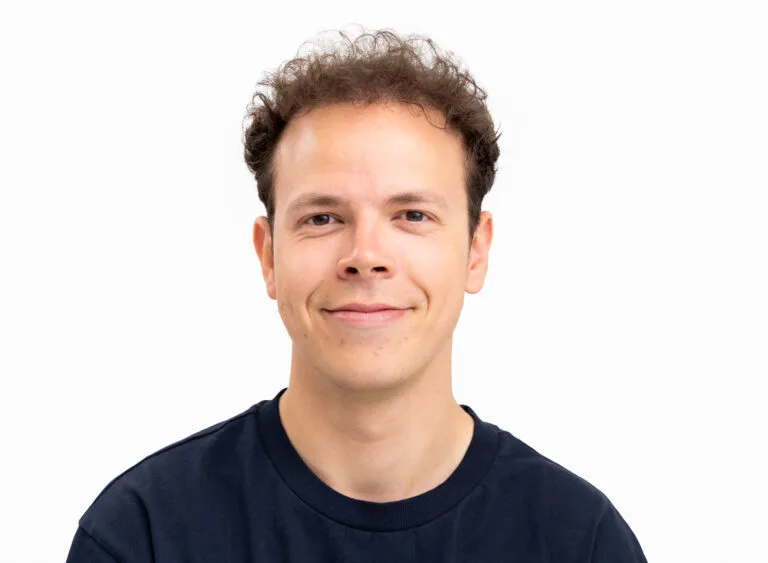

Frontline restoration is a common hair transplant treatment. On this page, we will tell you more about what causes high frontline, what the hair transplant treatment procedure looks like and what is possible in your situation.
A high front line can have several causes. There is the congenital high front line, which is hereditary. There is also the receding front line, due to hair loss or skin diseases.
A natural high front line is congenital and is not caused by hair loss or skin diseases. The hair implant starts higher than average and the hairline is stable. Through hair transplantation, the hairline can be lowered if desired.
Alopecia adrogenetica, the hereditary and most common form of hair loss, often begins with hair loss on the frontline. Initially, small inlets develop, but gradually the middle part of the frontline will also disappear. This form of hair loss often begins with a receding frontline and is generally well treatable with a hair transplant. By the way, the hairline is only one part of a hair transplant. On our comprehensive treatment page you can read how we approach the entire process.
The skin disease Frontal Fibrosing Alopecia (FFA) is a skin disease characterized by scarring on the frontline. This results in hair loss in the affected area. Because the skin is scarred, the success rate of the grafts (groups of hair follicles) to be transplanted will be lower than in healthy skin. Moreover, there is a high risk that sooner or later, the skin disease will flare up after the treatment and the newly transplanted hairs will fall out. A hair transplant is possible, but it is important to assess the risks beforehand.
At Zantman Clinic we mainly treat according to the FUE method. Many professional terms exist for the FUE hair transplant, including Direct Hair Implantation (DHI), Hair Stem Cell Transplantation (HST) and micro FUE. These terms represent variants of the FUE method. You can read more about the FUE method on the "FUE hair transplantation" page. At Zantman Clinic we do not limit ourselves to one variant of the FUE method, but tailor the implementation of the treatment to your specific wishes and individual situation. Below is an overview of the different steps of a hair transplant treatment day.
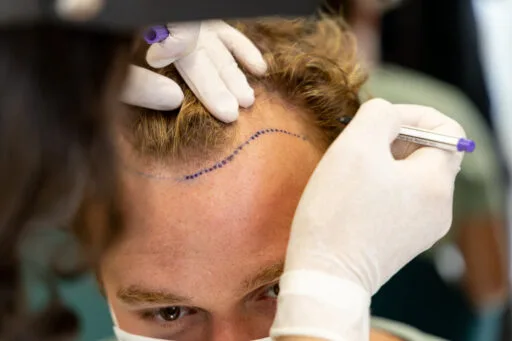
At the beginning of the day, or if desired several weeks before your treatment, the intake meeting is scheduled. This is a conversation with your attending physician in which the day is reviewed with you and the agreed treatment is discussed again. Then the front line is drawn and (part of) the hair is trimmed.
Frontline is a treatment that could generally also be performed as a (semi-)hair-sparing treatment. Here only the donor area is trimmed and the hair on top can be kept long. You can read more about the (semi-)hair-sparing treatment on the "hair-sparing hair transplant" page.
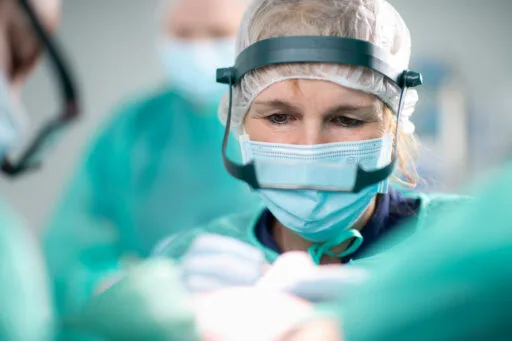
After the intake interview, treatment begins. Under local anesthesia, usually from the back of the head, the grafts to be transplanted are taken out. For a frontline treatment, the number of grafts to be transplanted is usually between 1250 and 2000 grafts.
After the lunch break, the doctor makes incisions (tiny cuts) in the skin. After the doctor has finished making these incisions, the grafts are inserted into them one by one with tweezers. These operations take several hours.
Na meerdere klinieken te hebben bezocht, heb ik besloten om bij Zandman Kliniek mijn haartransplantatie te laten uitvoeren. Naar mijn idee zijn ze ook erg scherp geprijsd.Vanaf het eerste consult voelde het contact bij deze kliniek meteen prettig, eerlijk en natuurlijk aan. Ik kreeg een duidelijk verhaal over wat mogelijk was en wat ik kon verwachten. Dit gaf al veel vertrouwen.Het contact daarna, via zowel e-mail als telefoon, verliep goed en professioneel. Mijn oorspronkelijke behandeldatum lag later dan ik wilde omdat de planning vol zat, maar door de snelle service hebben ze uiteindelijk geregeld dat ik veel eerder geholpen kon worden. Dit waardeerde ik enorm.Op de dag zelf werd alles nogmaals rustig uitgelegd: hoe de dag zou verlopen, wat er precies ging gebeuren en er was alle ruimte voor vragen. De arts en het team eromheen waren vriendelijk, professioneel en betrokken. Tijdens de behandeling viel het me op dat ze elkaar regelmatig afwisselden om scherp te blijven, wat mij alleen maar meer vertrouwen gaf. De sfeer was rustig en voelde de hele dag erg relaxed aan.Nu is het natuurlijk nog wachten op het eindresultaat, maar ik heb er alle vertrouwen in!
At the end of the treatment day, the aftercare consultation is scheduled. This is a conversation with the attending physician during which the aftercare instructions are reviewed with you. You will receive a printed copy of the instructions to take home. In it is indicated for each day what you should take into account and which instructions you should follow for an optimal recovery.
The recovery of the receiving area can be compared to the recovery of a superficial abrasion. In very vital people, the scabs are completely gone after 5 days, but on average it is after 10 days. For fast recovery, it is important to follow the FUE hair transplant aftercare instructions carefully. In addition, a healthy lifestyle contributes to a prosperous recovery of the skin.

Based on the information and photo you submit, you will receive advice from a specialist within one working day. We will send you the information by email. If necessary, you can follow this up with a consultation (by phone) for a more detailed explanation.
The risk of medical complications from hair transplantation is minimal. The superficial wounds in the skin generally recover very successfully.
A side note here is that the treatment is performed in an appropriate medical environment and according to proper treatment protocols. At a good hair clinic, this will be in order.
The number of grafts required for a hair transplant treatment depends on two factors. These are your personal wishes and the available donor material (usually the back of your head).
A small treatment is 500 to 1000 grafts. An average treatment is 1500 grafts. A major treatment is 2000+ grafts.
Get a personalized treatment indication today
Request a price and treatment indication by email. To do so, please email photos of the area to be treated to [email protected]. Include your first and last name, telephone number and date of birth.
You willthen receive a price and treatment indication by e-mail within 1 working day.
The cost of a hair transplant depends on the number of grafts (groups of hair follicles) required. A small treatment is 500 grafts, an average is 1500 grafts and a large treatment is 2000+ grafts.
The hair transplant costs are clearly listed on the page 'hair transplant costs' which can be found in the main menu. This page also lists available Last Minute dates and other current offers.
The waiting time for a hair transplant is on average 2 months. If you have a flexible schedule, you may be eligible for a Last Minute date. This means that if Last Minute date is available, you can get in within a few weeks. Last Minute dates can be found on the charges page.




Bentincklaan 21A
3039 KG Rotterdam
Netherlands
+31 (0) 10 276 2599
[email protected]